Tips on how to be happy again after losing your joy? Read this.

Here’s something nobody warned me about:
You can get everything you prayed for and *still* feel like someone turned the volume down on your life.
This year, I married the man of my dreams!
Genuinely one of the best things that has ever happened to me. I meannnn, it was my dream wedding and more.
But despite all that and the other good things that have happened lately, like getting on a plane for the first time for an international trip — which is something I finally get to check off my 28 by 28 bucket list — I noticed I couldn’t feel much of anything.
I wasn’t sad. But I was flat, and whenever I eventually did feel something, it was just me spiraling.
Gratitude felt like a word I knew how to spell but not how to feel, and even the word of God started sounding like, well, words.
So if you’re Googling “how to be happy again” at 11pm, this post is for you. It’s not a magic fix, and I’m not going to tell you to “just think positive.” It’s what I’m learning about why happiness goes quiet and the small, doable things that help it come back.
Why You Can’t Feel Happy Even When Life Is Good
Before we get to how to be happy, let’s talk about why it disappears, because you can’t fix what you refuse to name.
When I went digging, some things kept showing up, and I saw myself in four of them.
1. Anhedonia. This is when your brain’s reward system (aka, your central nervous system) is depleted or out of balance, so even good moments barely register. It’s not that you’re ungrateful. Your internal volume knob is just turned down.
2. The hedonic treadmill. We chase the next big goal, hit it, feel great for roughly eleven minutes, and then need a bigger goal. The finish line keeps moving, and satisfaction never gets to move in.
3. Lack of agency. Feeling stuck in circumstances you can’t control, like a stressful job, a draining environment, or relationships that take more than they give, can flatten you faster than almost anything.
4. Physical depletion. Bad sleep, skipped meals, and zero movement change how your brain works. You cannot think your way into joy on four hours of sleep and a protein bar. (Trust me, I’ve tried.)
If you’re a high achiever, that third and fourth one hit differently. I’m a firstborn daughter and a lifelong overachiever, which means my whole personality was “the one who gets it done.” When I finally crashed out of survival mode during my quarter-life crisis (which I still think I’m in the middle of) and wanted to learn how to actually live, I had no idea who I was without the grind.
And then, there’s the (5.) comparison trap of constantly measuring your life and achievements against other people’s. And maybe you even feel the way you feel because of an (6.) underlying medical condition, in which case, I’d advise you to see a professional.
Now, let’s talk about what actually helps.
7 Steps on How to Be Happy Again
Wondering how to be happy again when life looks good on paper but you feel numb? Here are 8 practical, honest steps.
1. Fix the boring basics first
I know. You came here for a spiritual awakening, and I’m telling you to eat lunch. But hear me out.
When you’re numb, the first place to look isn’t your mindset. It’s your maintenance.
- Are you sleeping?
- Eating actual meals?
- Moving your body in any way that isn’t walking from your bed to your laptop?
- Getting outside in the daylight?
Your brain needs fuel and rest to produce the chemicals that make life feel good. And if your basics are shaky, everything else you try will feel like pushing a car with the handbrake on.
I’m an ADHD entrepreneur who forgets to eat when I’m in the hyperfocusing zone, so I sometimes set alarms for my meals. It’s not glamorous, but it works.
Start with a consistent bedtime, a real lunch, or a ten-minute walk.
2. Focus on micro moments
Here’s the biggest shift for me:
I have stopped trying to “feel happy” and started looking for micro moments instead.
A micro moment is a tiny, ordinary pocket of pleasantness that lasts thirty seconds or less.
The first sip of your coffee while it’s still hot. The way sunlight hits your kitchen floor at 4pm. A song that comes on at exactly the right time. Your boo’s terrible joke. The feeling of clean sheets. The smell of new books.
When you’re numb, big joy is too far away to reach, so don’t aim there.
Aim for the smallest possible sparkle, and then do one thing most of us never do:
Stay in it for ten extra seconds. Notice it. Name it in your head (“this is nice”). Let your body register it. Romanticize your life!
That’s it. You’re not forcing happiness. You’re retraining your attention to catch the good stuff that’s already passing through.
Try collecting three micro moments a day and journaling about them. Within a week or two, you’ll start spotting them without trying.
3. Separate thoughts from facts
When you’re stuck in a flat, joyless season, your brain starts narrating, and it sounds very convincing.
- “I’ll never feel excited again.”
- “Nothing I do matters.”
- “I should be happier than this.”
It feels like truth, but most of the time it’s just a thought wearing a fact’s outfit.
- Fact: “I haven’t felt excited in about three weeks.” (Observable.)
- Thought: “I’m broken and I’ll always feel like this.” (Prediction and judgment.)
One is information. The other is a negative story.
While you’re at it, watch for a sneaky thinking habit called discounting the positive. It’s when something good happens and your brain immediately waves it away.
- “The party was beautiful, but anyone can have a party.”
- “That client loved my work, but they were just being nice.”
- “I have finally faced my fear of posting online, but I only have 10 followers.”
- “I hit my goal, but it wasn’t that big of a goal.”
Sound familiar? Every time you do this, you’re quietly deleting evidence that your life has good in it and then wondering why you can’t feel good.
Next time you catch yourself, try this:
Write down the positive thing, then write the “but” that your brain added, then ask whether the “but” is a fact or a thought. Nine times out of ten, it’s a thought.
Let the good thing stand on its own for once. Let your win (no matter how small) be enough.
4. Stop making happiness a goal
The second you put “be happy again” on your to-do list, you’ve turned joy into a project with deadlines and a performance review. Of course, you’ll feel worse.
Happiness works more like a side effect than a destination.
It shows up when you’re present, connected, rested, and doing things that matter to you. When you chase it directly, it runs. When you build a life it’s comfortable living in, it tends to move in on its own.
I meannnn,”Why are we rushing through a life that is meant to be lived, not completed?”
If your life is a checklist, you’ll always be one task away from being okay. And as someone whose entire thing is to create to-do lists, I’m telling you to take happiness off your list.
5. Stop doomscrolling!
If you want to know how to be happy, you can’t ignore that little device in your hands.
Social media is a highlight reel on a loop. You open the app “for a quick second,” and forty minutes later you’ve seen someone’s perfect launch, someone’s perfect body, someone’s perfect husband, and someone’s six-figure month.
Meanwhile, your brain has quietly filed a report: Everyone is further ahead than me.” You feel worse, and your nervous system never gets a break.
Comparison is sneaky because it feels like a fact (but it’s not), and chips away at your self-esteem.
You’re measuring your behind-the-scenes against everyone else’s best take. It also feeds the discounting habit from step 3: their win becomes proof that you’re behind, while your own win becomes “not that big of a deal.”
Yes, I know. I’m a new content creator myself, and what… I’m telling you to log off?
The irony is not lost on me — and no, don’t quit the internet. You shouldn’t live under a rock in this era! BUT stop letting strangers’ highlight reels set the standard for your real life.
Here’s what helps:
- Set a screen time limit.
- Curate your feed. Mute or unfollow anything that leaves you feeling “less than.”
- Protect the edges of your day. No phone for the first 30 minutes after you wake up or the last 30 before bed.
6. Do something with zero output
If you’re a creator, entrepreneur, or recovering overachiever, listen closely:
Not everything has to be content, a side hustle, or productive. If you’re like me, who is obsessed with results, it’s going to be hard. But it’s going to be worth it.
Do one thing this week that has no result, no audience, and no ROI.
It could be activities as simple and carefree as taking a bath, dancing in your room badly, walking with no podcast, or cooking something just because you want to eat it. You can pick up a hobby you’re terrible at.
For people who’ve been “productive” their whole lives, this feels uncomfortable, even a little scary. But that discomfort is useful information. It shows you how tightly your worth is tied to what you produce, and that’s exactly the knot you’re trying to loosen.
It’s okay if you’re not productive. You matter simply because you exist.
7. Ask who you are without the achievements
You’re not going to enjoy this question, but it’s the one that goes deepest:
Who am I when I’m not achieving, performing, or being useful?
You don’t need a polished answer. Just let the question exist and sit with your thoughts. Journal on it.
Notice which parts of you come alive when nobody’s watching. Get curious about what you like, not what you’re good at — because those are often two very different lists.
If your identity has always been “the strong one” or “the high performer,” learning to just be can feel like losing your footing. But it’s also where the real you gets to take up space.
8. Let someone in (and get support if you need it)
Numbness thrives in silence.
Tell someone, whether it’s your partner, a close friend, your faith community, or your journal. Saying “I feel flat and I don’t know why” out loud takes away a surprising amount of its power.
And please hear this: if the numbness lasts for weeks, gets heavier, or starts affecting your sleep, appetite, work, or relationships, talk to a doctor or a licensed therapist.
Persistent loss of joy can be a sign of depression or another health issue, and getting support is probably the fastest way to feel like yourself again.
How Long Does It Take to Be Happy Again?
Honest answer: it varies.
For some people, small shifts bring noticeable relief in a couple of weeks. For others, it’s a slower season. What matters is that you’re moving toward feeling, not away from it.
Don’t measure your progress by whether you feel happy.
Measure it by whether you noticed one more micro moment than yesterday, ate one more real meal, or caught one more thought pretending to be a fact. Those are the receipts you need to be happy again.
A 3-Step Starter Plan
If you want to begin today, here’s the simplest possible version:
- Step 1: Fix one basic need (sleep, a real meal, or a walk) and write down three micro moments a day.
- Step 2: Catch one thought and see if it’s a fact or a negative story. Also, catch one time you discounted something good.
- Step 3: Do one thing with zero output, and tell one person how you’ve really been feeling.
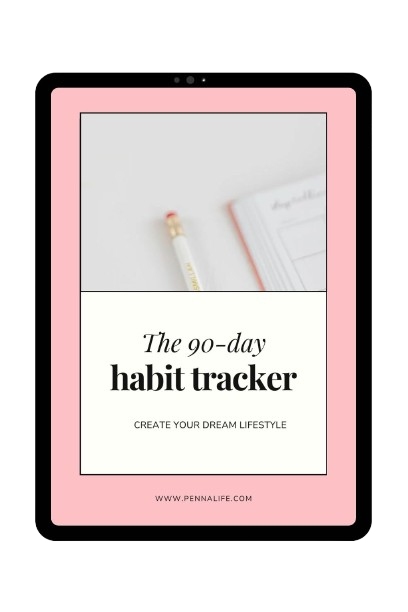
FREE PRINTABLE PDF
Struggling to stay consistent or productive?
The 90-Day Habit Tracker helps you get clear, stay focused, and follow through on the habits you need to support your dream life. Track your habits daily for 90 days straight—and finally build real momentum toward your goals.
You Are Going to Be Happy Again
Learning how to be happy again isn’t about becoming a different person or finding some new big goal to chase. It’s about slowing down enough to feel the life you already have, one tiny moment at a time.
You didn’t lose your joy. It just got buried under a lot of doing. And you’re allowed to dig it out slowly, gently, and with snacks.
If you want a guided way to figure out what’s actually draining you and what you want your life to feel like, my Life Audit Workbook walks you through it step by step.
And if this post hits home, hop on the newsletter, The Content Folder, where I share what I’m figuring out in real time.