Looking for simple and effective ways to deal with terrible anxiety in the morning? Here are 11 sure-fire tips you should try out.

As an ADHDer, multi-passionate entrepreneur, and overthinker, I know firsthand what it feels like to wake up to that familiar knot tightening in your chest.
It is one of the worst feelings—ever.
Your mind starts racing, a thousand thoughts clash in your head, and suddenly the day ahead feels overwhelming even before you step out of bed… so much so that you are unable to do anything at all.
Stress and anxiety significantly impact our productivity and overall well-being. But if you implement the simple yet effective strategies I’ll share with you today, you will finally be able to calm morning anxiety.
You will start every day with focus and fewer worries, even on those challenging mornings when it feels like the odds are stacked against you. So, without further ado, let’s get to it.
How Mood Affects Productivity
Our mood plays a tremendous role in determining how productive we can be throughout the day.
A research survey found that 88% of employees are more productive when they are happy at work. Conversely, negative emotions such as anxiety and stress can have detrimental effects on efficiency. No wonder workplace stress costs U.S. businesses over $300 billion annually in lost productivity.
That’s to say, “mood” directly impacts our ability to perform effectively in both personal and professional settings. So, knowing how to control morning anxiety will improve your mood, efficiency, and overall well-being.
11 Tips to Break the Cycle of Morning Anxiety
If you’ve ever asked, “What helps morning anxiety?” Here are 11 tips to stop terrible anxiety attacks in the morning and actually get things done.
1. Prepare the Night Before
Leaving things until the last minute sets off anxiety pretty quickly. You wake up and have no clue what to do or where to start—and before you know it, the day is already gone.
So, make it a part of your nighttime routine to prepare for the next day. This will calm the morning chaos to a large extent.
Here’s how to make this practical:
- Pick your outfit the night before. Sounds simple, but standing in front of your closet for 20 minutes every morning is a silent anxiety trigger. Eliminate that decision before bed.
- Clear your kitchen sink. Waking up to a pile of dirty dishes instantly puts me in a bad mood. I like to spend 10-30 minutes tidying up the kitchen the night before.
- Pack your bag. Whether it’s your work bag or gym bag, pack them the night before so you’re not running around frantically searching for things.
- Write down your top 3 priorities for the next day. This gives your brain permission to “switch off” at night, knowing you already have a plan in place.
The goal is to reduce the number of decisions you have to make in the morning. The fewer surprises, the calmer your mind.
2. Get Adequate Sleep
Adequate sleep is essential for stress relief and for starting the day on a positive note.
On average, the recommended sleep period for optimal health and productivity is 7-8 hours. But it’s not just about the number of hours. It’s about the quality of sleep, too.
Develop a consistent bedtime routine to ensure you get proper sleep. You can limit TV and screen time at night to improve sleep quality because, when you get adequate rest, you feel refreshed and ready to take on the day.
When you wake up well-rested, your brain is sharper, your mood is more stable, and anxiety has far less power over you.
3. Establish a Healthy Morning Routine

Create a healthy and consistent morning routine.
Because the truth is, a chaotic morning leads to a chaotic day. But when you have a structured morning routine, you start the day feeling grounded and in control—and that energy reflects in everything you do.
Wake up at the same time each day, avoid your phone for the first 30 minutes, and engage in mindfulness techniques (such as making a journal entry) and energy-boosting activities (such as running, taking a walk, and dancing).
Having a set series of actions for your morning routine can provide a sense of structure and stability, which sets a positive vibe for every day. And the routine doesn’t have to be elaborate. Start small—even 20-30 minutes of intentional morning habits can make a significant difference.
4. Create & Prioritize Your To-Do List
Waking up without a to-do list and waking up to an overwhelming one results in the same problem—paralysis. When you don’t know what to focus on, anxiety fills the gap.
Here’s how to create a to-do list that actually reduces anxiety instead of adding to it:
Use the “Top 3” method. Instead of writing a never-ending list of 20 tasks, identify your top 3 most important tasks for the day and focus on completing those first. Everything else is a bonus. Waking up without a to-do list and waking up to a long list of tasks result in the same issues, such as nervousness, restlessness, and an inability to focus.
Separate urgent from important tasks. Not everything that feels urgent is actually important. Use the Eisenhower Matrix—a simple four-quadrant tool—to categorize your tasks by urgency and importance, so you know exactly where to direct your energy.
So, create a daily to-do list and prioritize your tasks by focusing on the most important and urgent ones first. This keeps anxiety under control by ensuring you tackle the most critical and time-sensitive items on your list.
Consider using other task prioritization techniques (like my recommendations below) to streamline your workflow and reduce your anxiety.
5. Practice Deep Breathing Exercises
When anxiety strikes in the morning, your body goes into fight-or-flight mode—your heart races, your chest tightens, and your thoughts start spiraling.
Deep breathing is one of the fastest and most effective ways to interrupt this response and bring your nervous system back to a calm state. It activates the body’s relaxation response and promotes a sense of peace and clarity.
Here’s how to make deep breathing a practical tool in your morning routine:
Pair breathing with a grounding technique. While you breathe, try the 5-4-3-2-1 method — identify 5 things you can see, 4 you can touch, 3 you can hear, 2 you can smell, and 1 you can taste. This pulls your focus into the present moment and away from anxious thoughts.
Practice box breathing. Inhale for 4 counts, hold for 4 counts, exhale for 4 counts, and hold again for 4 counts. This method is used by Navy SEALs to stay calm under pressure — so it’s more than capable of handling your morning stress.
Use a guided app. If you’re new to breathwork, apps like Calm, Headspace, or Insight Timer offer guided breathing exercises that take the guesswork out of the process. Even a 5-minute session can make a noticeable difference.
The best part? You can practice deep breathing anywhere—in bed before you get up, in the shower, or even in your car before heading into work.
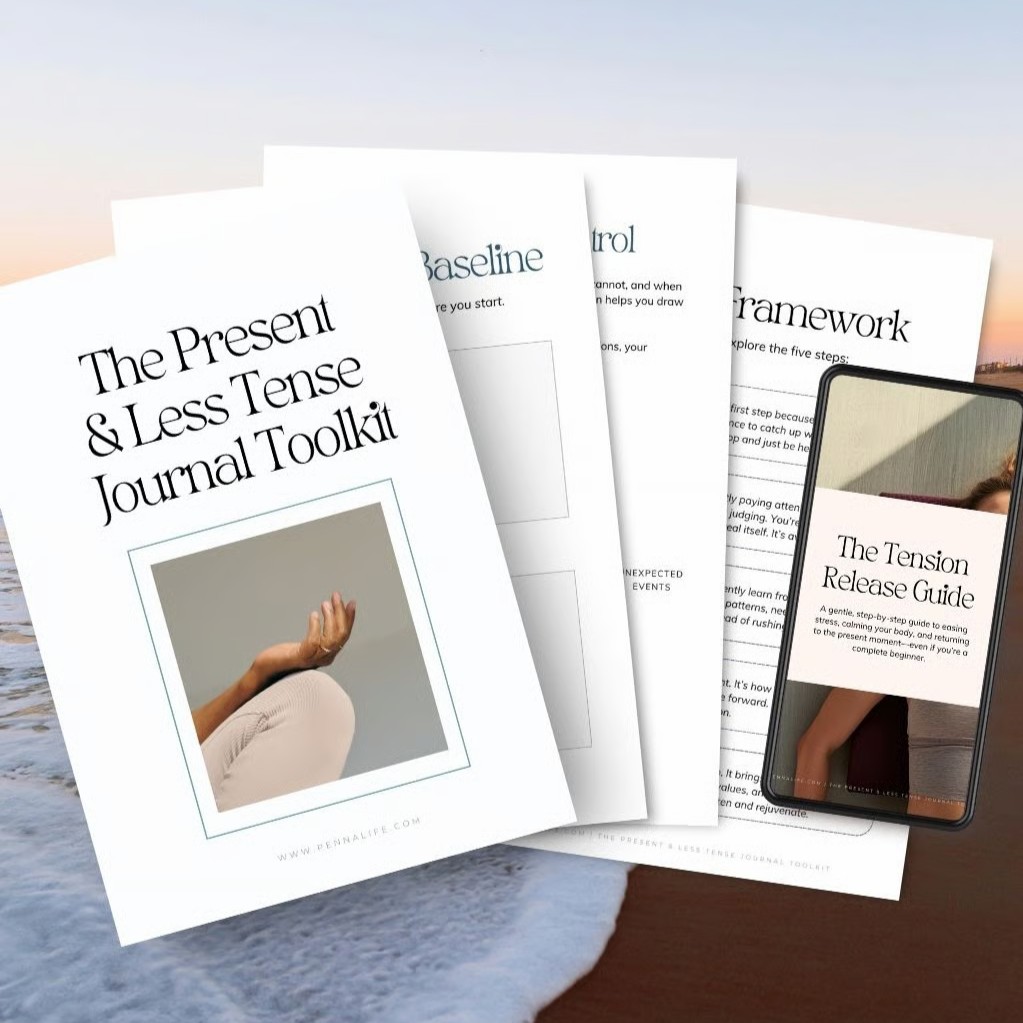
printable workbook
The Present & Less Tense Journal Toolkit
This toolkit includes a guided journal and the Tension Release Guide to slow your pace, release tension, and move through your days with intention instead of worries.
6. Use Workflow Management Tools
For busy professionals, staying organized isn’t just a nice-to-have. It’s essential for managing stress and maintaining productivity. When your work feels scattered and disorganized, anxiety naturally follows.
Here are some practical workflow tools that can help:
Project management tools. Platforms like Trello, Asana, or Notion allow you to organize your tasks, set deadlines, and track your progress in one place. Having a clear visual overview of everything on your plate reduces the mental load of trying to keep track of it all in your head.
Time-tracking tools. Apps like Toggl Track or Clockify help you understand where your time is actually going. This is eye-opening for most people and helps you make smarter decisions about how you spend your work hours.
Automation tools. Tools like Zapier can automate repetitive tasks—like sending follow-up emails or updating spreadsheets — freeing up your mental energy for higher-value work.
Templates. Create plug-and-play templates for recurring tasks, such as meeting agendas, email responses, or project briefs. This saves time and reduces the cognitive effort of starting from scratch every time.
The goal of these tools isn’t to add more things to manage. It’s to clear mental clutter so you can show up to your mornings feeling organized and in control.

7. Incorporate Mindfulness Techniques
Mindfulness is the practice of bringing your full attention to the present moment—without judgment.
And when it comes to morning anxiety, it’s one of the most powerful tools you have because anxiety almost always lives in the future. Mindfulness brings you back to right now.
Here’s how to weave mindfulness into your mornings practically:
Morning pages journaling. Popularized by Julia Cameron in The Artist’s Way, morning pages involve writing three pages of unfiltered, stream-of-consciousness thoughts every morning. It’s not about writing well. It’s about dumping everything from your head onto paper so you can start the day with mental clarity. Here’s the ultimate guide to morning pages (+ 31 prompts for you).
Recite positive affirmations. Stand in front of your mirror and speak daily affirmations out loud. Statements like “I am calm and capable,” “I can handle whatever today brings,” or “I choose peace over anxiety” might feel awkward at first, but with consistency, they rewire the way your brain responds to stress.
Try a short meditation. Even 5 minutes of guided meditation in the morning can significantly lower cortisol levels and set a calm tone for the rest of the day. Apps like Headspace make it easy to get started, even if you’ve never meditated before.
Practice mindful eating. Instead of rushing through breakfast while scrolling your phone, sit down and actually taste your food. Notice the flavors, textures, and smells. This simple act of presence can be surprisingly grounding.
Mindfulness isn’t about achieving a perfectly blank mind. It’s about training yourself to notice when your thoughts are spiraling and gently bringing your attention back to the present.
8. Set Realistic Expectations
Unrealistic expectations are one of the biggest—and most underrated—drivers of anxiety.
When we hold ourselves to impossible standards, we’re setting ourselves up for a cycle of stress, disappointment, and self-criticism before the day has even begun.
Here’s how to start setting expectations that serve you rather than stress you:
Audit your current expectations. Take a moment to write down the expectations you hold for yourself each day. Are they realistic given your time, energy, and resources? Or are you consistently expecting yourself to do more than is humanly possible?
Embrace the concept of “good enough.” As a recovering perfectionist myself, I can tell you that perfectionism and anxiety go hand in hand. Not every task needs to be done at 100%. Learn to distinguish between tasks that truly require your best effort and those where “good enough” is perfectly acceptable.
Communicate boundaries clearly. A lot of anxiety comes from trying to meet other people’s expectations without questioning whether they’re reasonable. Practice saying no, renegotiating deadlines, and having honest conversations about what’s realistic.
Build buffer time into your day. Things rarely go exactly as planned. Leave gaps between tasks and appointments so that when something takes longer than expected, it doesn’t throw your entire day off and spike your anxiety.
Things may not always go as planned, and you may not be able to accomplish your set goals by the expected deadlines.
It’s okay to accept this and focus on what you can control, such as setting realistic expectations and adjusting your strategies when things don’t pan out as you thought. Give yourself the grace to be human.
9. Focus on Self-Care

Anxiety can be your body’s response to stress. If you want to start each day feeling chill and productive, make self-care a priority.
Here’s how to make self-care a non-negotiable part of your mornings:
- Nourish your body with the right foods. Start your day with a balanced meal and avoid skipping breakfast or eating sugary foods that cause energy crashes and worsen anxiety symptoms.
- Move your body—even briefly. A 15-minute walk in the fresh air, a quick yoga flow, or even some light stretching can reduce cortisol and release mood-boosting endorphins.
- Spend time in nature. Fresh air and natural light help regulate your circadian rhythm, boost your vitamin D levels, and naturally lower anxiety.
- Protect your work-life balance. If anxiety is a recurring issue, it may be worth examining whether work is bleeding into your personal time. Set firm boundaries around your working hours.
- Schedule “me time” unapologetically. Whether it’s a long bath, a good book, or a solo coffee in the morning quiet, protect time that’s purely for you. Filling your own cup first makes you better equipped to handle the demands of the day.
Self-care looks different for everyone. The key is to find what genuinely restores you—and do it consistently, not just when you’re running on empty.
Here are some self-care ideas for you:
10. Try the Self-Evaluation Method
Anxiety thrives on unchallenged thoughts. The “what if” thoughts.
So, when next you feel anxious, do this:
- Identify the anxious thought. The first step is simply noticing what you’re actually thinking. For example: “I’m going to fail this presentation today.”
- Ask yourself: “What’s the evidence for and against this thought?” What facts support this fear? What facts contradict it? More often than not, you’ll find that the evidence against your anxious thought far outweighs the evidence for it.
- Ask yourself again: “What would I tell a friend in this situation?” We are almost always kinder and more rational when giving advice to someone we love than when talking to ourselves. Applying that same compassion to your own thoughts can instantly shift your perspective.
- Replace the thought with a more balanced one. Instead of “I’m going to fail,” try “I’ve prepared for this, and even if it doesn’t go perfectly, I’ll handle it.”
- Write it down. Journaling your anxious thoughts and seeing them on paper often makes them feel less overwhelming and easier to challenge
The moment you start questioning the stories your anxious mind tells you, they begin to lose their grip.
The self-evaluation method is a cognitive technique rooted in Cognitive Behavioral Therapy (CBT) that helps you do exactly that. With consistent practice, this technique rewires how your brain processes stress, making it easier to catch and reframe anxious thoughts before they spiral out of control.
11. Seek Professional Support
Sometimes, morning anxiety goes beyond what self-help strategies can address on their own—and that’s completely okay.
If your anxiety is persistent, severe, or significantly interfering with your daily life, it may be time to seek support from a mental health professional.
A therapist or counselor can help you identify the root causes of your anxiety, develop personalized coping strategies, and work through deeper patterns that morning routines and mindfulness exercises alone can’t fix. Cognitive Behavioral Therapy (CBT) in particular has a strong evidence base for treating anxiety disorders.
Remember, seeking help is not a sign of weakness. It’s one of the most courageous and self-aware things you can do for yourself.
Dealing With Terrible Anxiety in the Morning
With the right mindset and strategies, you can wake up to anxiety-free mornings and start every day on a positive note.
Implement these tips to control morning anxiety symptoms and boost overall productivity. This would not change overnight, but with patience and consistency, you will overcome morning anxiety and have fulfilling days.
Want to wake up to peaceful and exciting mornings? Get the Present & Less Tense Toolkit.

Looking for more tips for calm and productive mornings?